Indian researcher Anirudha Mahagaonkar says that his collaboration with the Norwegian Polar Institute (NPI) has given him a strong academic platform and shaped him as a person. Now NPI is strengthening its cooperation with Indian scientists.
Anirudha Mahagaonkar recently earned his PhD at the Norwegian Polar Institute, made possible through an exchange agreement between NPI and its Indian sister institution, the National Centre for Polar and Ocean Research (NCPOR) and its upper organization Ministry of Earth Sciences (MoES) of the Government of India. Mahagaonkar lived in Tromsø for four years before returning to India last year, where he has continued to work as a researcher at NCPOR. He says the collaboration between the two institutions has provided him with a solid foundation:
“Everything I do now is built on that foundation. Working with both NPI and NCPOR has shaped me as a researcher and as a person”, he says.
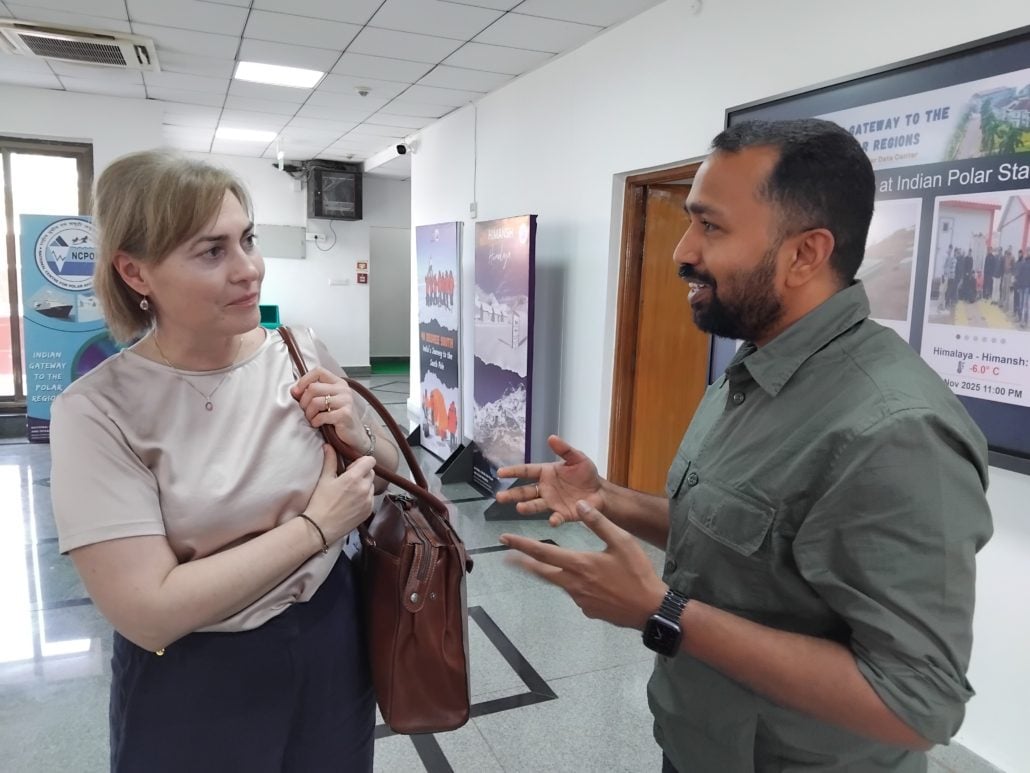
Director Camilla Brekke and researcher at NCPOR,Anirudha Mahagaonkar. Photo: Karine Nigar Aarskog / NPI
Strengthening ties in Goa
Last week, a delegation from NPI—Director Camilla Brekke and researchers Kenichi Matsuoka and Agneta Fransson—visited Goa, where NCPOR is headquartered. The Norwegian Ambassador to India also attended. The purpose was to discuss future collaborative projects. NPI and NCPOR signed an MoU last year, which both institutions now aim to put into action.
“India and Norway have long been strong partners in the Arctic and Antarctic. As ice in the polar regions melts, cooperation becomes even more important, in both the Arctic and the Southern Ocean, because global systems are interconnected. The fruitful discussions we’ve had give confidence that the collaboration will materialize into concrete projects”, says Thamban Meloth, Director of NCPOR.
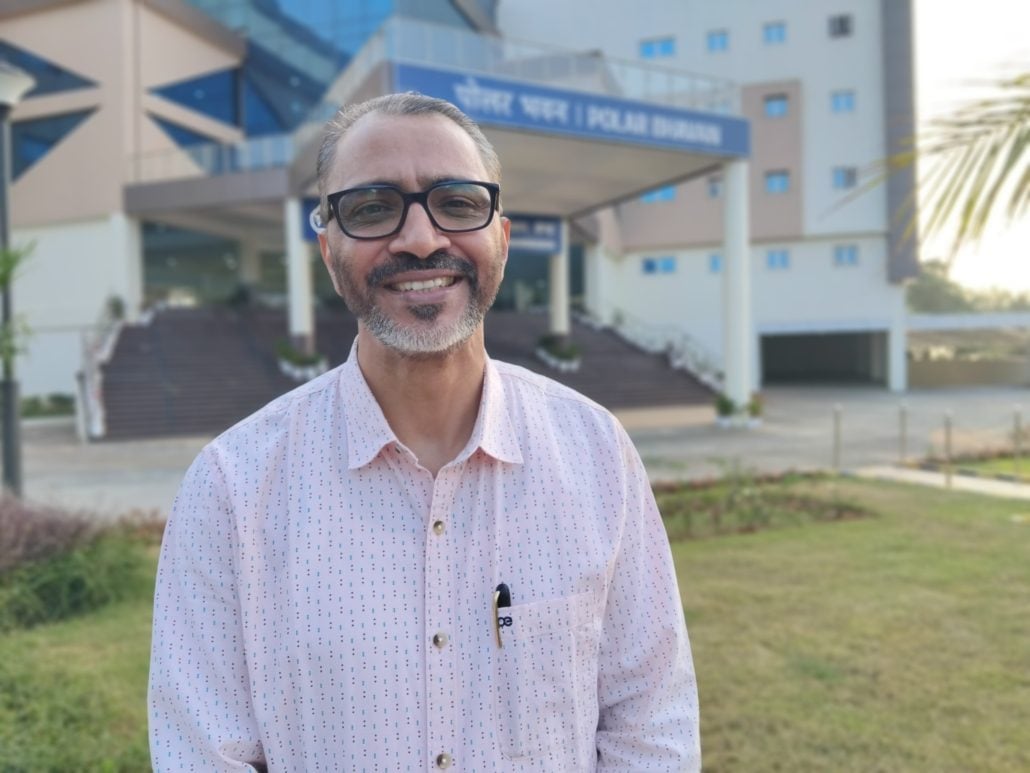
Director at NCPOR, Thamban Meloth. Photo: Karine Nigar Aarskog / NPI
NPI has projects in the Arctic Ocean, Kongsfjorden on Svalbard, Antarctica, and the Southern Ocean that could naturally involve closer cooperation with NCPOR. Additional exchanges of PhD students and postdocs, and possibly summer schools, are also being considered.
“The well-established relationship between NCPOR and NPI gives us a strong foundation to further develop collaboration with Indian researchers in climate, ice, and ocean research in the Arctic and Antarctic. One ambition is to explore joint research projects in both Ny-Ålesund and Dronning Maud Land”, says Director Camilla Brekke.
NCPOR and MoES have previously funded two additional students to strengthen national capacity in Arctic and Antarctic glaciology. One of them, Dr. Vikram Goel—who completed his PhD at NPI and joined NCPOR seven years ago—is now a key collaborator.
“His expertise in glacier geophysics and ice-flow modelling is highly complementary to Anirudha’s, enabling us to address large-scale questions such as sea-level change”, says Kenichi Matsuoka.
The other fellow, Ankit Pramanik, worked at NCPOR as well, and now he works at an international organization ICIMOD in Nepal for Himalaya glaciology and hydrology.
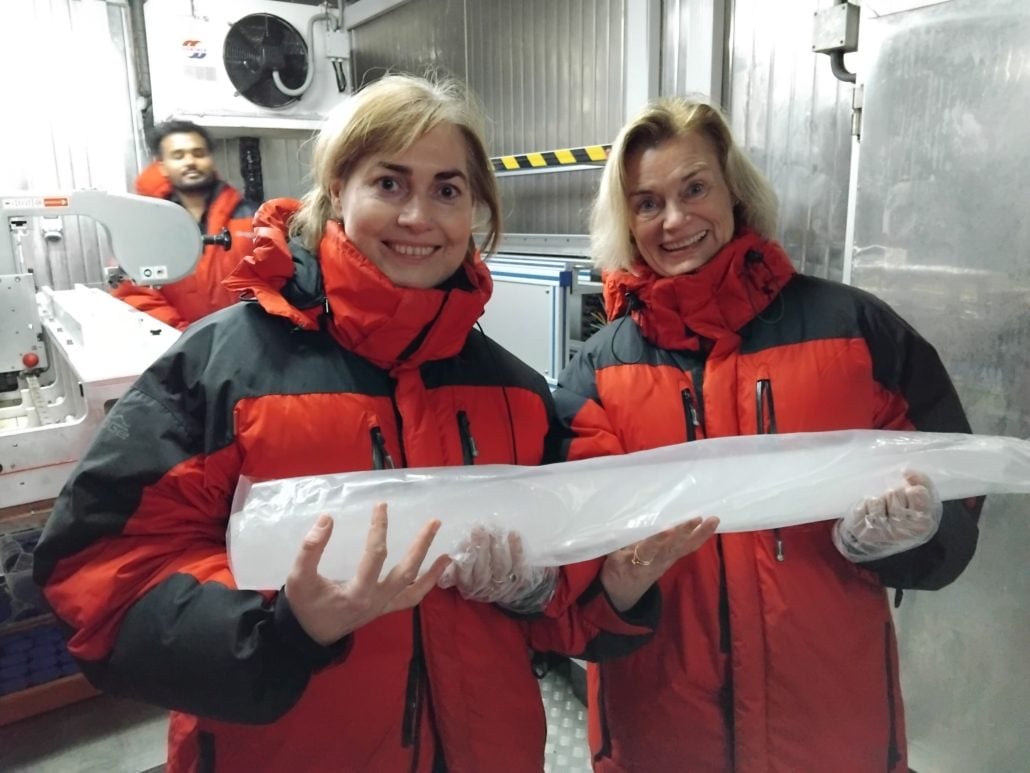
Director Camilla Brekke (left) and ambassador May-Elin Stener with an ice core from Antarctica. Photo: Karine Nigar Aarskog / NPI
A decade of collaboration
Matsuoka explains that a solid partnership has already been built over the past decade through a project called MADICE, which studied paleoclimate and the dynamics of the Nivlisen ice shelf and surrounding ice rises.
“Shortly after COVID-19, a joint India-Norway team investigated two additional ice rises. We identified one as an excellent site for collecting paleoclimate data spanning the last 20,000 years, covering the period when the Antarctic ice sheet was at its largest in recent history”, says Matsuoka.
During the visit to NCPOR, he and Indian researchers discussed a concrete action plan to promote interdisciplinary studies of Antarctic climate and ice sheet dynamics—work that ultimately helps improve future projections of Antarctica’s impact on global sea-level rise.
Collaboration on changes in ocean processes
Agneta Fransson emphasizes that collaboration is crucial to address questions related to rapid changes in Kongsfjorden, the Arctic Ocean, and the Southern Ocean: warming, melting ice adding freshwater, increased carbon uptake, and ocean acidification—all of which affect biogeochemical processes and marine ecosystems. One example is the retreat of glaciers in Svalbard fjords. When glacier fronts move from the sea onto land, the entire marine system and carbon cycle change.
“Through collaboration between NPI and NCPOR, for example we aim to estimate the total carbon budget in Kongsfjorden and determine whether the fjord is shifting from carbon uptake to becoming a source of carbon emissions”, says Fransson.
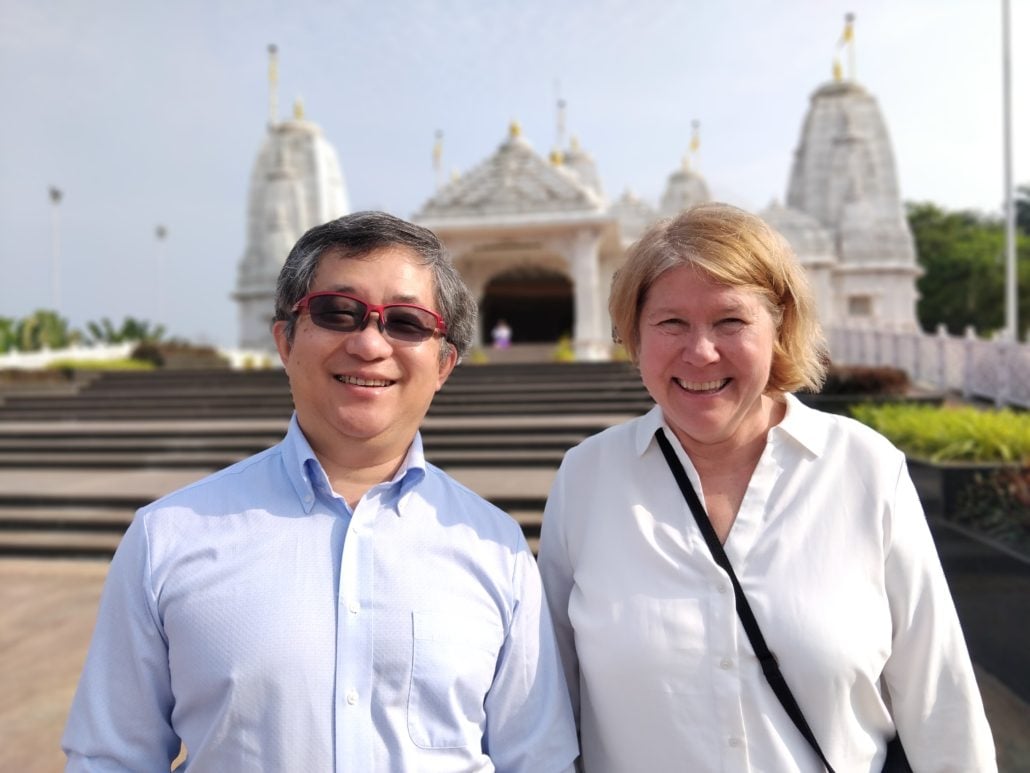
Kenichi Matsuoka and Agneta Fransson are both researchers at NPI. Photo: Karine Nigar Aarskog / NPI
Based on last year’s MoU and the recent visit to NCPOR, she is optimistic about future cooperation:
“The visit to NCPOR and discussions with Indian researchers have been significant for the process ahead. We see great potential for collaboration, complementing each other with observations, process studies, and modeling”, Fransson adds.
Plans are already underway for a digital workshop involving more Indian and Norwegian scientists.
A partnership with global impact
Norwegian Ambassador May-Elin Stener highlights the importance of Norway-India collaboration in polar research:
“Polar research cooperation between Norway and India is vital to better understand the drivers of global climate change and the best responses. For example, data from Svalbard is important for India’s monitoring and forecasting of the annual monsoon. We greatly value the collaboration between Indian and Norwegian researchers at the Norwegian research station in Ny-Ålesund and between our respective stations in Dronning Maud Land”, says Stener.
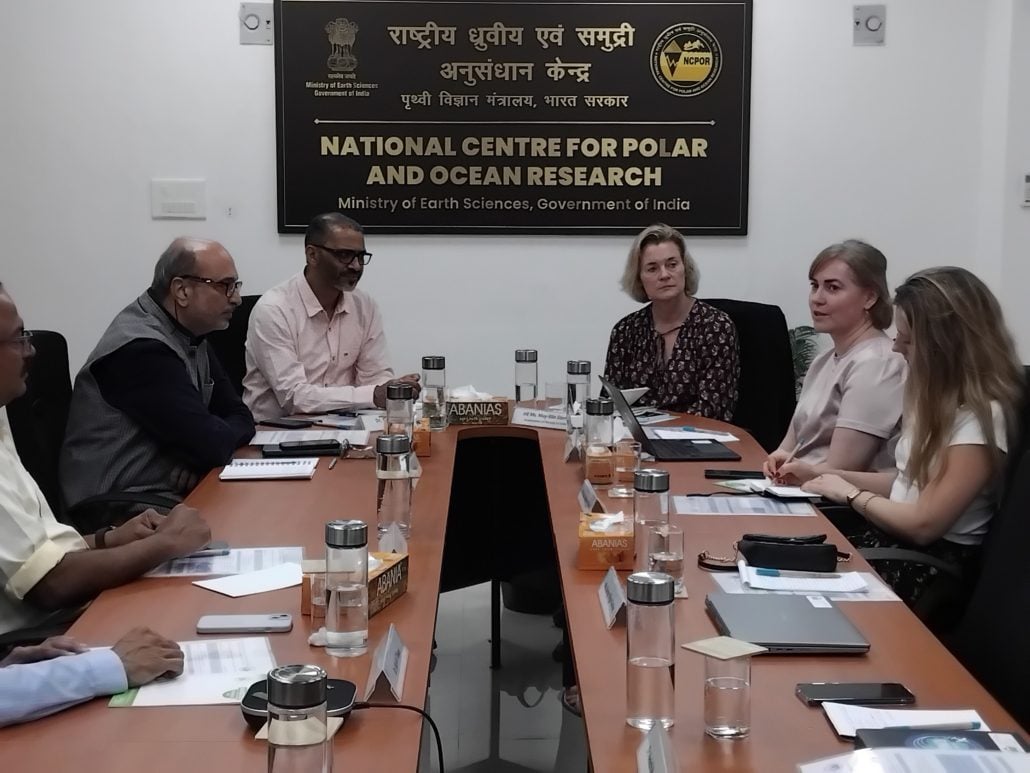
There were many good discussions during the visit. Photo: Karine Nigar Aarskog / NPI
At NPI, Mahagaonkar was supervised by glaciologist Geir Moholdt. Using advanced radar and laser satellite data, they studied how far ocean water penetrates beneath the Antarctic ice sheet in the so-called grounding zone—the point where ice flowing from the interior meets the ocean and begins to float as ice shelves. This zone is critical for ice sheet stability because if ocean water reaches further inland, the ice may flow more easily into the sea.
Mahagaonkar now plans to continue remote sensing work in Antarctica to strengthen knowledge about what is happening to the ice:
“I want to stay at NCPOR for a long time and build capacity where it is lacking. The next step is to combine satellite data with field observations to gain a complete understanding”, he says.
He admits he has not yet been to Antarctica but is eager to go—and sees great potential for continued collaboration with NPI:
“I see future projects as natural collaborations with my Norwegian colleagues. Cultural differences disappear when the goal is shared: to understand the polar regions”, says Mahagaonkar.
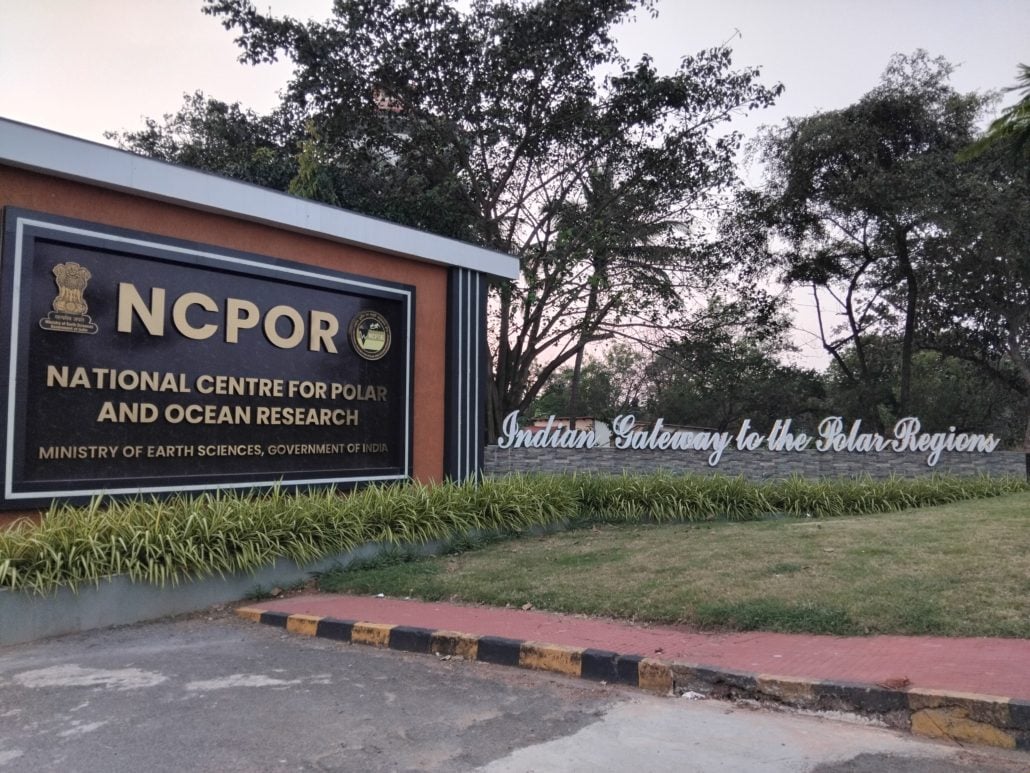
The campus of NCPOR is beautifully located in Goa. Photo: Karine Nigar Aarskog / NPI


