Despite the continued decline in sea ice around Svalbard, polar bears there are in better body condition today than they were 25 years ago. This is shown by a study recently published in Scientific Reports.
“This is a surprising finding. If we had been asked 25 years ago about the consequences of bears now spending two fewer months on the ice each year, we would have expected leaner animals, reduced reproduction, and the beginning of a population decline. Instead, we see that they are in better condition,” says senior researcher at the Norwegian Polar Institute, Jon Aars.
He is the lead author of the study which has just been published in Scientific Reports.
The research maps the polar bears’ body condition in spring over the period from 1995 to 2019. Body condition is a measure of how large the bears’ fat reserves are.

Jon Aars. Photo: Magnus Andersen, Norwegian Polar Institute
The polar bear finds different kinds of food
Based on the collected data, the researchers arrived at this striking result.
“The most likely explanation is that polar bears have increasingly managed to compensate for shorter time on the sea ice by exploiting resources on land. They take more reindeer, feed on walrus carcasses, and make use of eggs, birds, and harbour seals,” says Aars.
All three of these species have increased significantly in numbers during this period.
“This appears to have enabled the bears to maintain—and even improve—their body condition, even though they spend far more time on land than they did previously,” Aars explains.
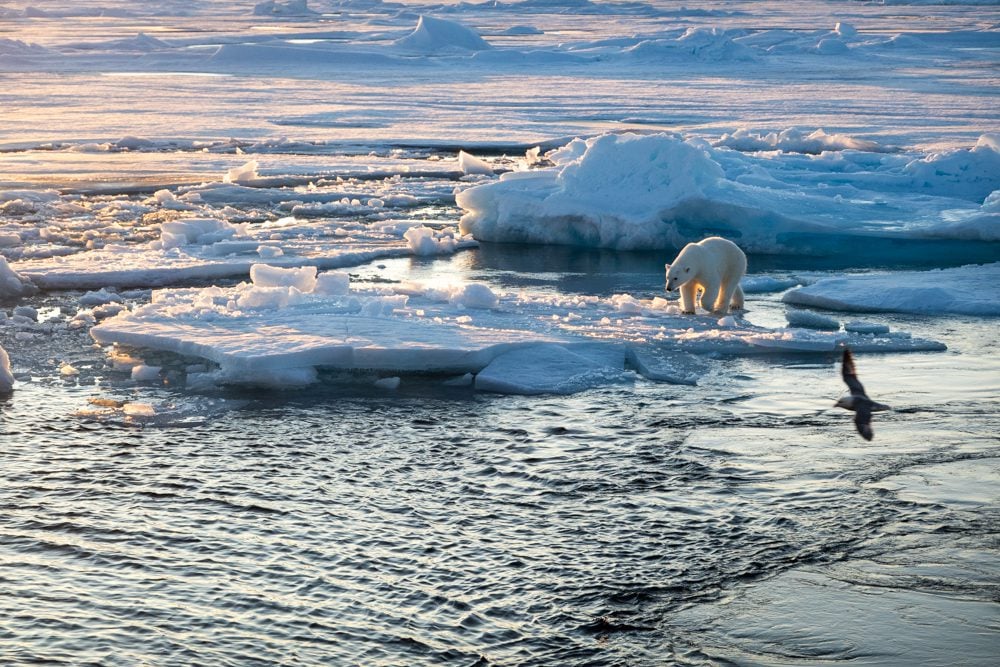
Photo: Trine Lise Sviggum Helgerud, Norwegian Polar Institute
He adds that this development differs from what has been observed in several other parts of the Arctic, where polar bears become thinner in years with longer ice-free seasons.
“This also means that polar bears are increasingly affecting terrestrial ecosystems, particularly bird colonies, and are becoming a more important part of Svalbard’s terrestrial ecosystem than before,” says Aars.
Dependent on sea ice
In the longer term, however, it is still likely that body condition will decline as sea ice loss continues.
“Polar bears depend on sea ice for a minimum period each year, but we do not yet know where this critical threshold lies. So far, there are no signs of a dramatic decline in survival or reproduction,” Aars emphasizes.
Body condition is nevertheless considered an early warning indicator, and changes here may be among the first signs of more serious consequences in the future. This is why monitoring data such as those analysed in this study are important for management.

Photo: Adam Steer, Norwegian Polar Institute


