The Norwegian Polar Institute has been accepted as a full member of the European Polar Board as of January 2026. The membership gives the institute a stronger role in Europe’s most important collaborative body for polar research, infrastructure and policy.
The European Polar Board (EPB) brings together leading research institutions, research councils, logistic operators, funding agencies, and government ministries from across Europe that work in the Arctic and Antarctic. The organisation serves as a strategic hub for cooperation on polar research, facilitates multilateral collaboration among the Members and serves as a single point of contact for the European polar research community in its interactions with international partners.
The Norwegian Polar Institute has long participated in the EPB through the Research Council of Norway, but will now have an autonomous voice in the work shaping Europe’s polar strategy. The membership brings Norwegian priorities, infrastructures and research programmes closer to European cooperation at a time when the polar regions are changing rapidly and the need for coordinated knowledge gathering is greater than ever.
Strengthening Norway as a polar nation
“Becoming a full member marks an important new chapter for us,” says Camilla Brekke, Director of the Norwegian Polar Institute.
“International cooperation is essential for understanding the rapid changes taking place in the Arctic and Antarctic. Through this membership, we can contribute more directly with our experience, infrastructure and expertise – while also strengthening Norway’s role as a polar nation,” she adds.
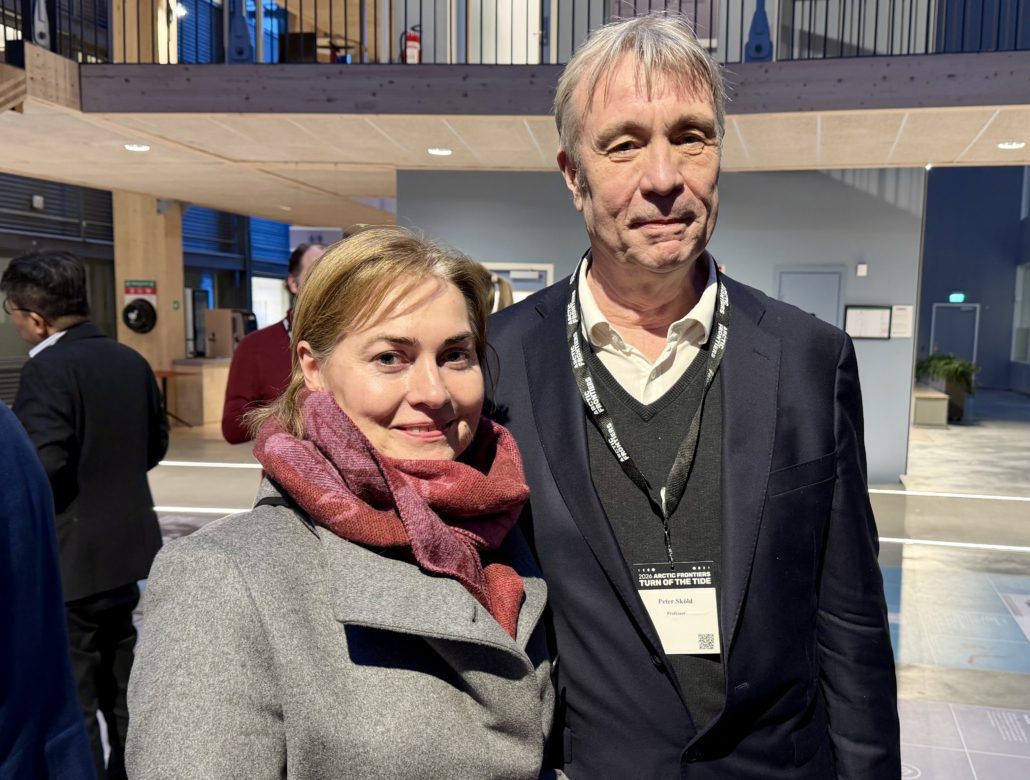
Director of the Norwegian Polar Institute, Camilla Brekke, together with Chair of EPB, Peter Sköld, during the Arctic Frontiers conference in Tromsø in February this year. Photo: Karine Nigar Aarskog / Norwegian Polar Institute
As a directorate responsible for polar research and environmental monitoring, the institute brings substantial capacity to the EPB. NPI leads the research station in Ny-Ålesund, operates the Troll Station in Antarctica and owns the research icebreaker Kronprins Haakon. The institute is also a key partner in major ongoing initiatives such as the Troll Observation Network in Antarctica and the planning of the Fifth International Polar Year (IPY 5).
A stronger voice
EPB Chair Peter Sköld says that welcoming the Norwegian Polar Institute as a full member is highly significant:
“The EPB greatly values NPI’s membership. It gives the organisation a stronger European voice in polar research,” Sköld says.
He believes the strengthening of the EPB will contribute to better coordination and deeper cooperation among Europe’s polar actors, and enhance the organisation’s ability to bring key institutions together within a common framework.
“This gives us better opportunities to build a strong European voice and foster closer collaboration across disciplines, countries and infrastructures. The EPB has significant capacity and an important responsibility to strengthen polar research and ensure that it remains a priority for the EU and national research funders,” Sköld says.
European Polar Board
- An independent European organization working on strategic issues in the Arctic and Antarctic.
- Brings together research institutes, government bodies and other actors to strengthen European polar research.
- Works to improve coordination, information sharing and efficient use of infrastructure.
- Serves as a common contact point between European actors and international partners.
- Its work is carried out through various expert groups and large collaborative projects.
- Established by the European Science Foundation in 1995 and became independent in 2015, with its Secretariat in The Hague.


