The Svalbard Research Office was opened on 3 March in Longyearbyen. During the opening, Minister of Research and Higher Education Sigrun Aasland also presented an updated strategy for research and higher education in Svalbard.
The new Svalbard Research Office will be operated jointly by the Research Council of Norway and the Norwegian Polar Institute. It will serve as a scientific contact point for research communities working in Svalbard and contribute to the coordination of research activities.
“Svalbard is important for the world’s collective knowledge of the Arctic. Norway is the world’s eyes and ears in the North, and this is especially important now. We have facilitated international research collaboration on Svalbard for more than 60 years, and we will continue to do so. Today’s security situation makes this work both more important and more demanding. We are now strengthening Norwegian research leadership and enabling safe, high‑quality research cooperation,” says Minister of Research and Higher Education Sigrun Aasland.
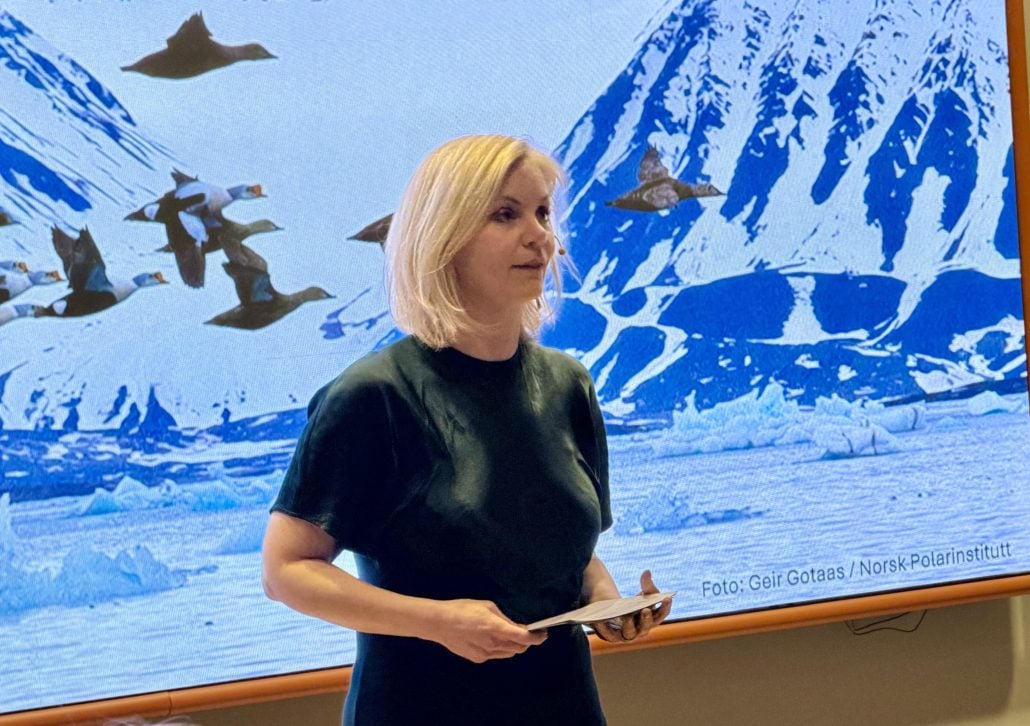
Minister of Research and Higher Education, Sigrun Aasland. Photo: Karine Nigar Aarskog / Norwegian Polar Institute
The Research Council of Norway has had a Svalbard office in Longyearbyen for more than 25 years. The Council has played a central role in coordinating and developing research activity on Svalbard, including through the management of the Research in Svalbard (RiS) database, funding for fieldwork and strategic activities, and secretariat functions for the Svalbard Science Forum and the Svalbard Science Conference.
Present on Svalbard for 100 years
The Norwegian Polar Institute has been present in Longyearbyen since the late 1970s, and has operated a year‑round station in Ny‑Ålesund since 1968. Together with its predecessor, the Norway’s Svalbard and Arctic Ocean Survey established in 1928, the institute has conducted research and mapping on Svalbard for nearly 100 years.
“Svalbard Research Office will play a highly important role at a time when Svalbard research is more crucial than ever. I am pleased that the Research Council of Norway and the Norwegian Polar Institute will collaborate on this work. The office will strengthen Norwegian research leadership on Svalbard. It will enable high‑quality research, serve as a resource for the research communities, and work to ensure that research is conducted with the lowest possible environmental footprint in a vulnerable area,” says Mari Sundli Tveit, Chief Executive of the Research Council of Norway.
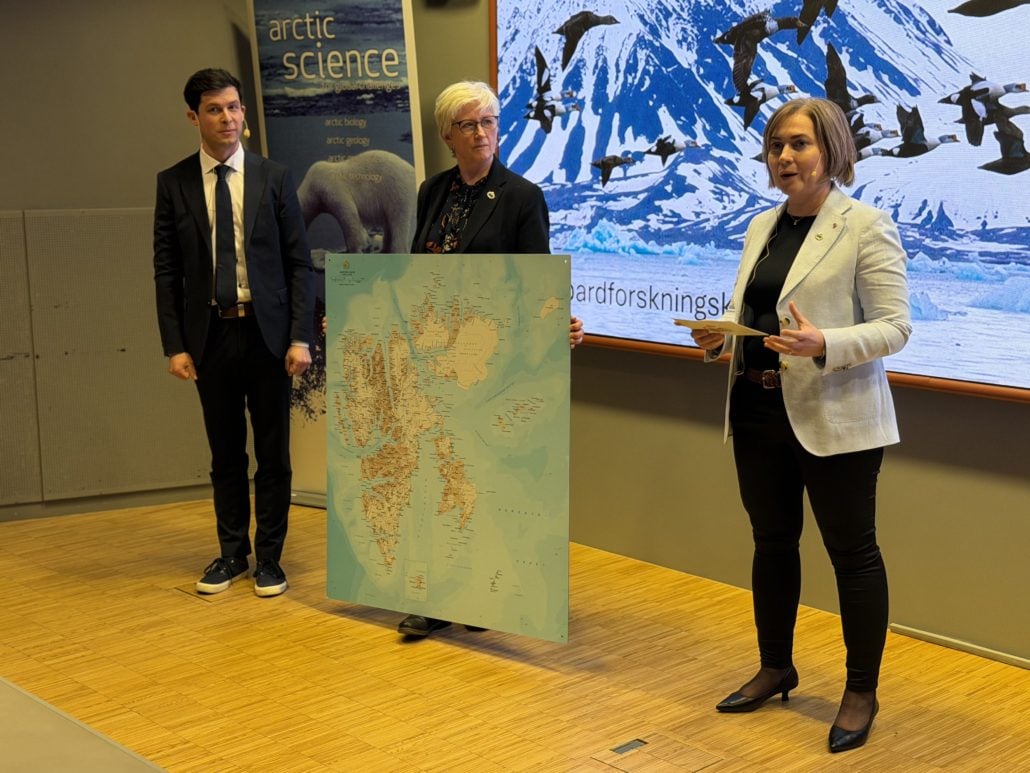
Director of the Norwegian Polar Institute, Camilla Brekke (right), and Department Director Evy Jørgensen presented a map as a gift to the Svalbard Research Office. On the left is one of the office’s two co-leaders, Zdenek Dvorak from the Norwegian Polar Institute. Photo: Karine Nigar Aarskog / Norwegian Polar Institute
Minimizing the footprint
Svalbard has long been a central arena for climate, environmental, and polar research, and the archipelago’s nature and geography make it a relevant reference area in international research.
“The research conducted on Svalbard is of exceptionally high scientific quality, driven by both Norwegian and international actors. When activity takes place across the entire archipelago—within a natural environment that is both vulnerable and rapidly changing—we need an actor who can see the bigger picture. Good coordination is essential. This is where the Svalbard Research Office plays a key role. The office will help ensure that research activities are well aligned, that fieldwork and instrumentation are wisely planned, and that the research footprint is reduced as much as possible,” says Camilla Brekke, Director of the Norwegian Polar Institute.
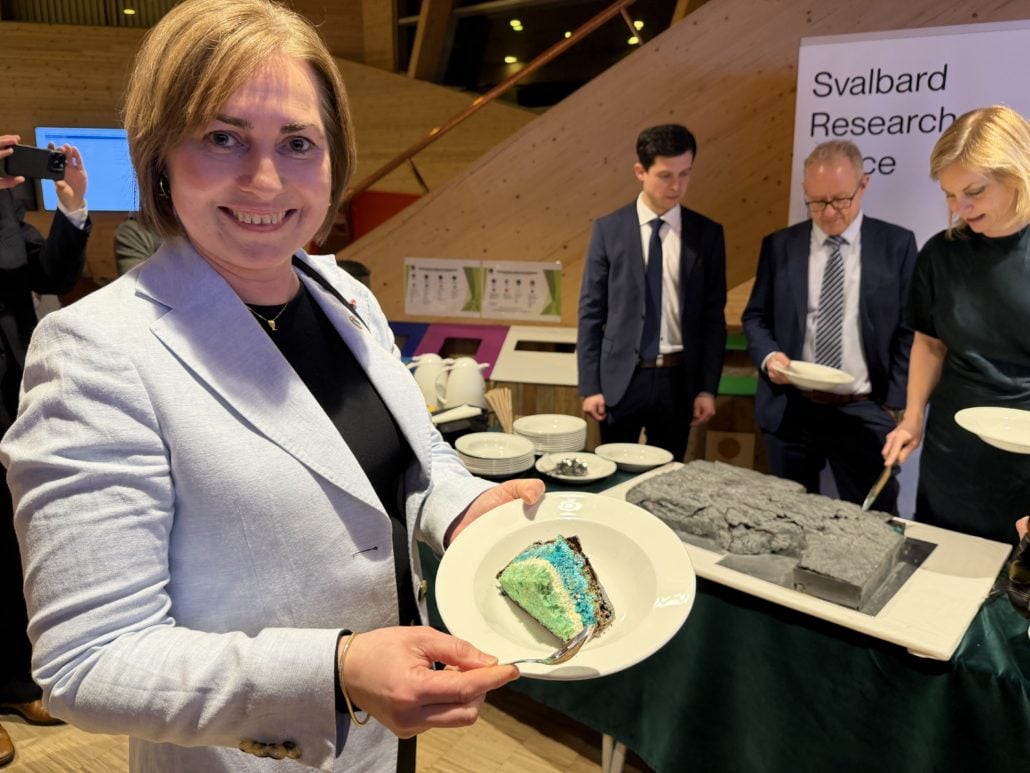
Director of the Norwegian Polar Institute, Camilla Brekke, holding a slice of the cake served at the opening. The cake is an edible interpretation of Nordenskiöldbreen, created using precise drone‑mapping data. The artwork is based on the 2024 research project UAV Crevasse, a collaboration between UNIS and NTNU led by Dr. Richard Hann, which examined how crevasses influence glacier melt rates. The cake’s form reflects how crevasses increase heat exchange between ice and air. Behind Brekke are the office’s two co‑leaders, Zdenek Dvorak (left) and Thomas Hansteen, along with Minister Sigrun Aasland. Photo: Karine Nigar Aarskog / Norwegian Polar Institute
About the Svalbard Research Office
The Svalbard Research Office is located in Longyearbyen and consists of resources from the Research Council of Norway and the Norwegian Polar Institute. Its main tasks are to:
- follow up on the strategy for research and higher education in Svalbard
- serve as a clear contact point for research communities
- facilitate high‑quality research
- coordinate activity to reduce overall pressure on the environment
- prepare an annual overview of research activity on Svalbard
The office will help ensure that research is conducted within applicable regulations and frameworks, and support knowledge‑based and holistic management of research activity on Svalbard.
About the strategy for research and higher education in Svalbard
The strategy for research and higher education in Svalbard was first adopted in 2018. The updated version builds on developments since then, including increased research activity, climate change, and changes in Svalbard’s local community and infrastructure. The strategy has now been adjusted in accordance with the 2024 Svalbard White Paper and the 2025 White Paper Secure Knowledge in an Uncertain World.
The update aims to provide clearer guidance for research and educational activities and strengthen overall efforts related to research leadership, research security, and international cooperation on Svalbard.


