Tracking changes in the abundance of Arctic species has historically been tedious and exacting work. Now modern technology is being put to use to facilitate this important task.
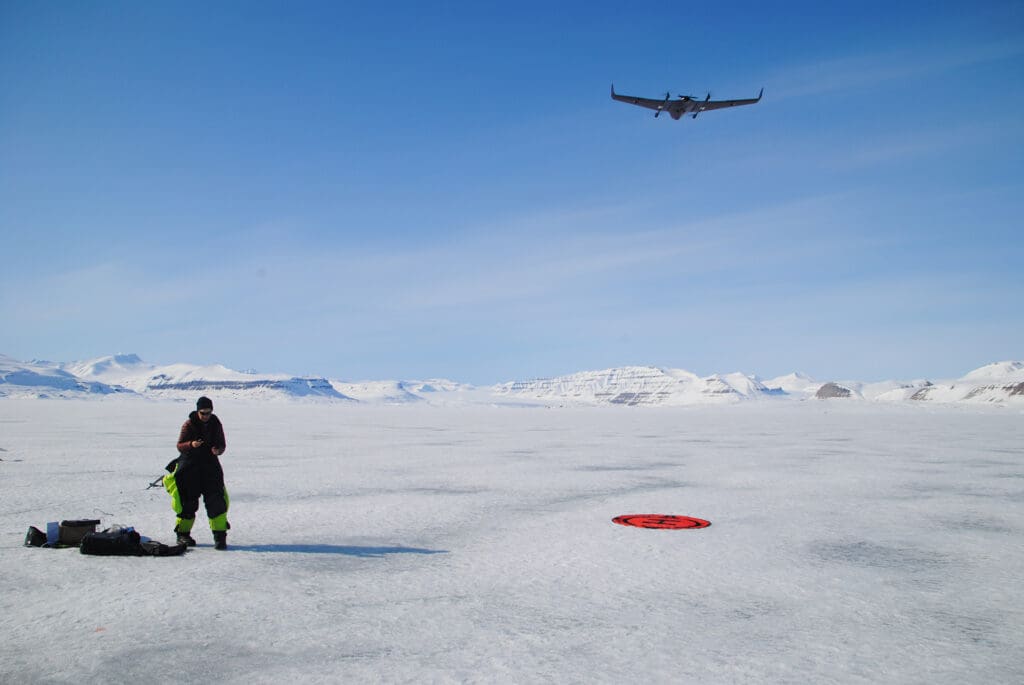
Drones were Vertical Take-Off and Landing (VTOL) capable, enabling controlled vertical launch and recovery from sea ice or small areas of beach, while a more energy-efficient fixed wing flight mode maximised survey coverage. Photo: Marc Rams i Rios / Oregon State University
By: Andy Lowther, Kit M Kovacs and Christian Lydersen // Norwegian Polar Institute
Rolf A Ims // UiT The Arctic University of Norway
Marc Rams i Rios // Marine Mammal Institute, Oregon State University, USA
Alberto Roldan Sastre // University of Akureyri, Iceland
Monitoring Arctic sentinel species, such as marine mammals, typically involves regular assessments of population size, which are often conducted by counting individuals from images collected during aircraft surveys. In Svalbard, the most recent aerial survey of ringed seals was conducted almost two decades ago using a fixed wing (piloted) aircraft to collect photographic imagery across 18 fjords throughout the archipelago. This survey generated over 20,000 images, all of which had to be processed manually. Collecting and analysing aerial imagery requires significant manpower (and hence financing) to process large volumes of raw images into data, extracting the needed information on a timescale useful for management purposes.
- This article was first published in Fram Forum 2026
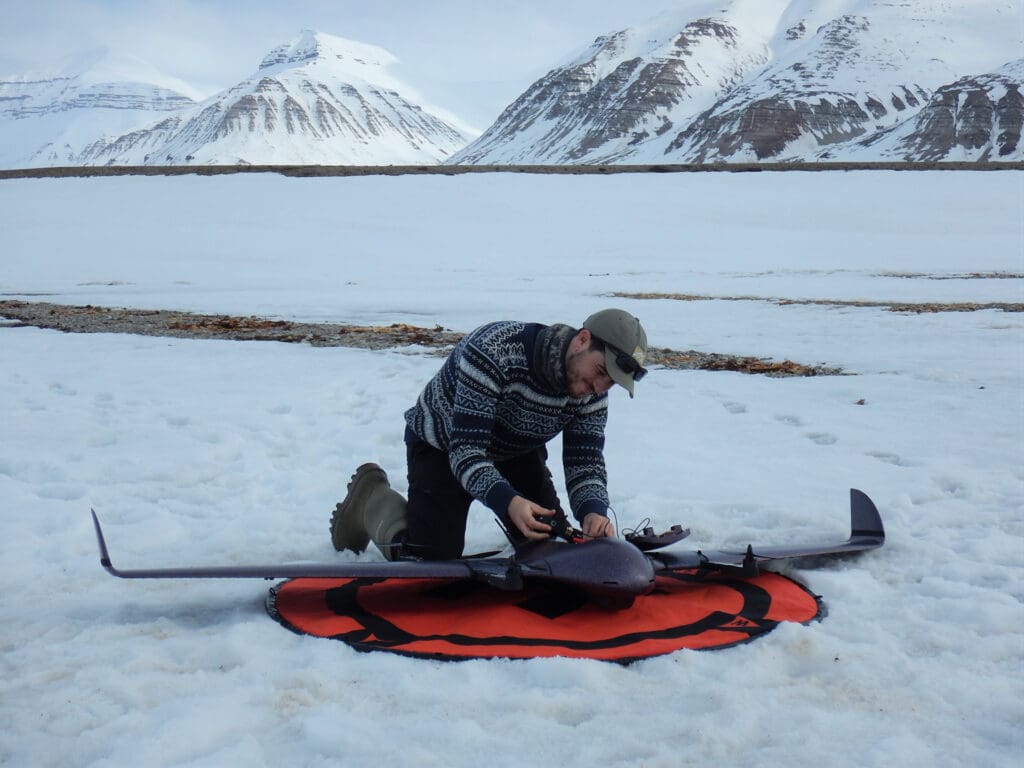
Between each hour-long survey flight, the lithium ion batteries and camera memory cards were replaced, and the drone was back in the air within minutes. Photo: Kit Kovacs / Norwegian Polar Institute
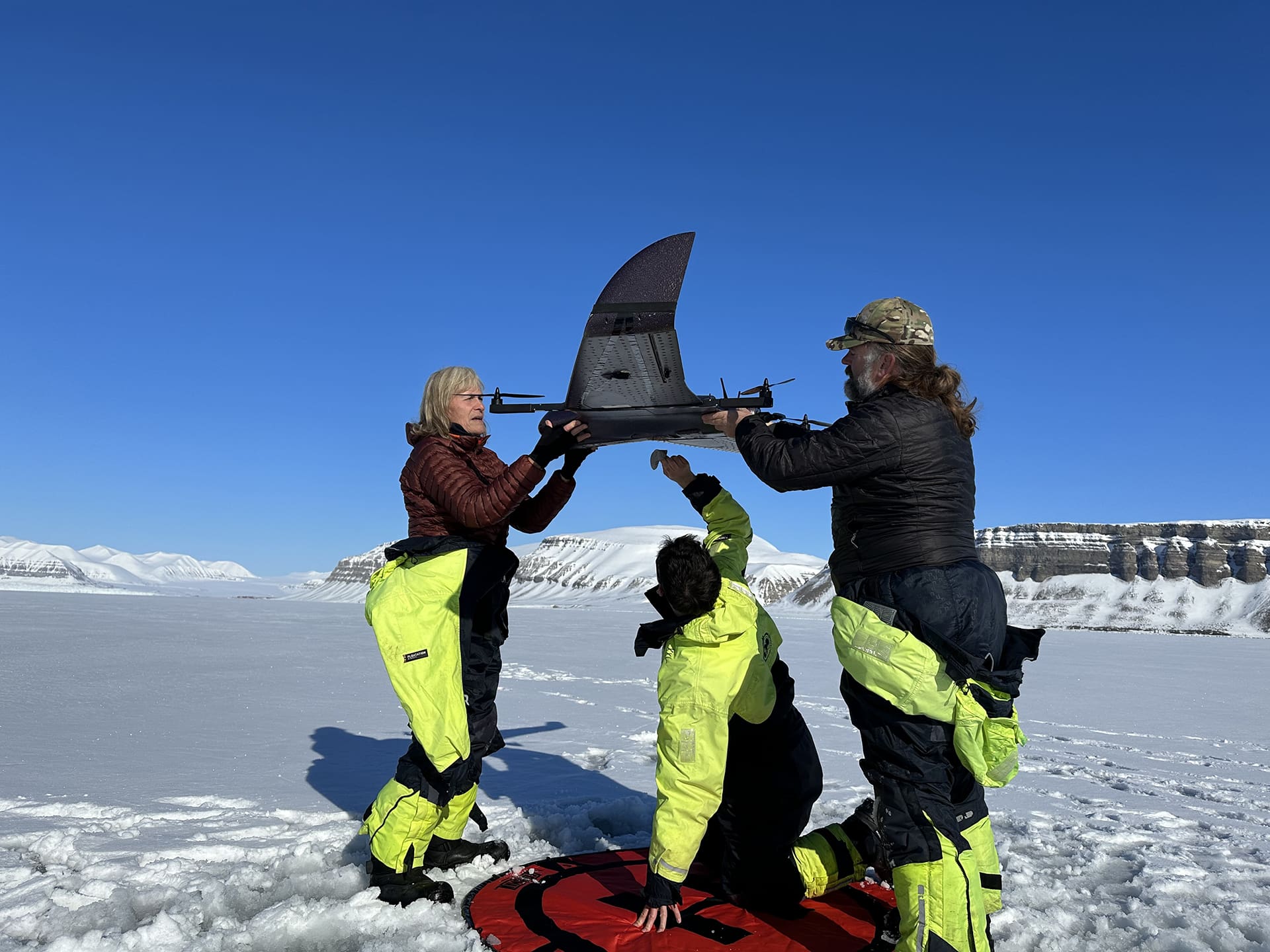 Downdrafts during landing meant that the camera had to be cleaned of snow prior to each flight. The airframe was light enough to make this task easy. Photo: Christian Lydersen / Norwegian Polar Institute
The pressing need for rapid analysis of large imagery datasets has driven recent advances in the use of Computer Vision (CV) models. One-stage or optimised CV models have emerged as powerful tools for reducing the workload associated with processing aerial imagery in animal surveying. Over the past five years, the Norwegian Polar Institute has been developing the techniques, methodologies and field competence to survey marine mammals using drones. Between 2023 and 2025, full-scale surveys of ringed seals hauled out on all ice-covered areas in Isfjorden (2023, 2024, 2025), Van Mijenfjorden (2024, 2025) and Kongsfjorden (2024) were conducted, resulting in the first updated abundance estimate in twenty years (see Further reading). Over 32,000 aerial images were collected and used to train and validate a state-of-the-art optimised CV model to streamline image processing.
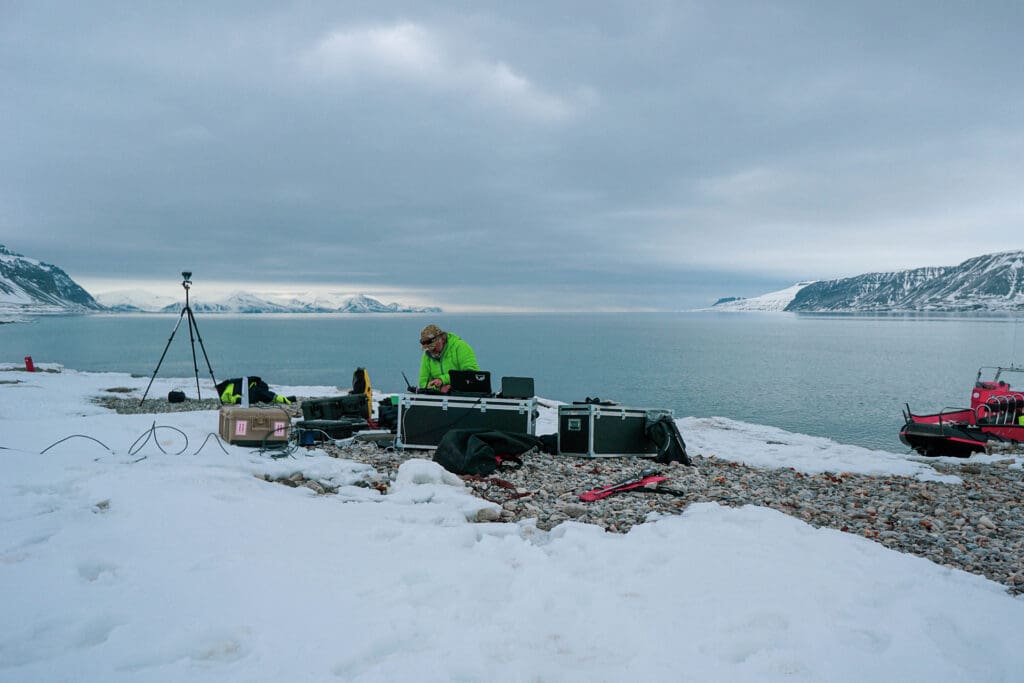
Mission planning required high resolution maps against which to plan flights. Starlink connectivity coupled with laptops connected to drone flight controllers enabled a streamlined data collection pipeline from flight planning through to image collation. All images were georeferenced to <1 cm accuracy using Post Processing Kinematics. Photo: Marc Rams i Rios / Oregon State University
We used a single-stage CV model called YOLO8, trained on a large subset (70%) of the manually annotated survey imagery collected in Isfjorden. The remaining images from the Isfjorden surveys were used to evaluate and adjust the model in order to determine whether it is generalising well or merely memorising the training data. After refining the training process over several iterations, we finally tested the model on a test set consisting of the Van Mijenfjorden survey imagery.
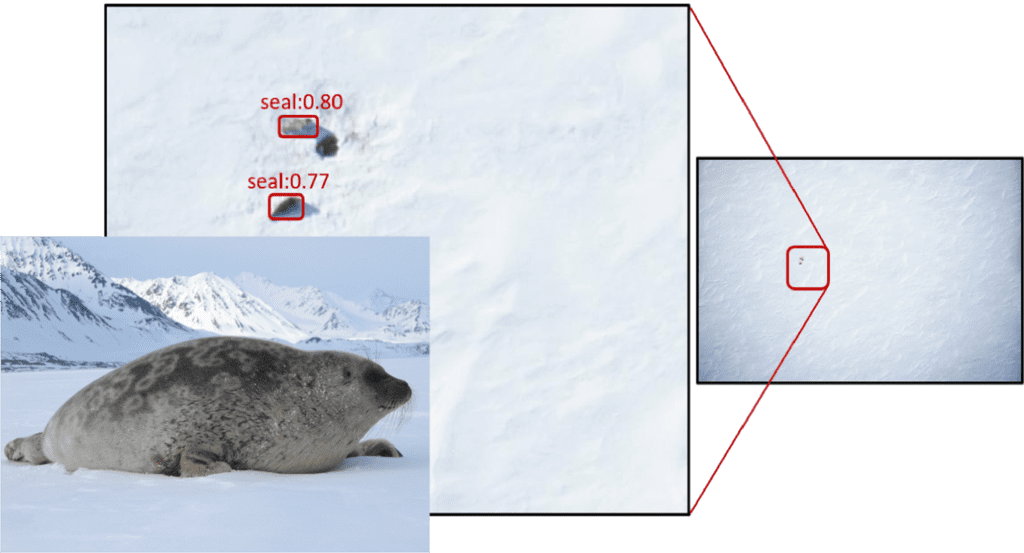
Clear, blur-free images resulted in a high quality dataset which could be annotated for the presence of ringed seals. This dataset was used to train our Computer Vision model which achieved high classification success when exposed to new images (in this case 80% and 77% that the objects in the image were seals). Photos: Christian Lydersen / Norwegian Polar Institute and Alberto Roldan Sastre / University of Akureyri
The final model detected 96% of the seals in the Van Mijenfjorden test dataset and reduced the human workload for post-processing image analyses by 99.7%.
We used a single-stage CV model called YOLO8, trained on a large subset (70%) of the manually annotated survey imagery collected in Isfjorden. The remaining images from the Isfjorden surveys were used to evaluate and adjust the model in order to determine whether it is generalising well or merely memorising the training data. After refining the training process over several iterations, we finally tested the model on a test set consisting of the Van Mijenfjorden survey imagery.
The final model detected 96% of the seals in the Van Mijenfjorden test dataset and reduced the human workload for post-processing image analyses by 99.7%.
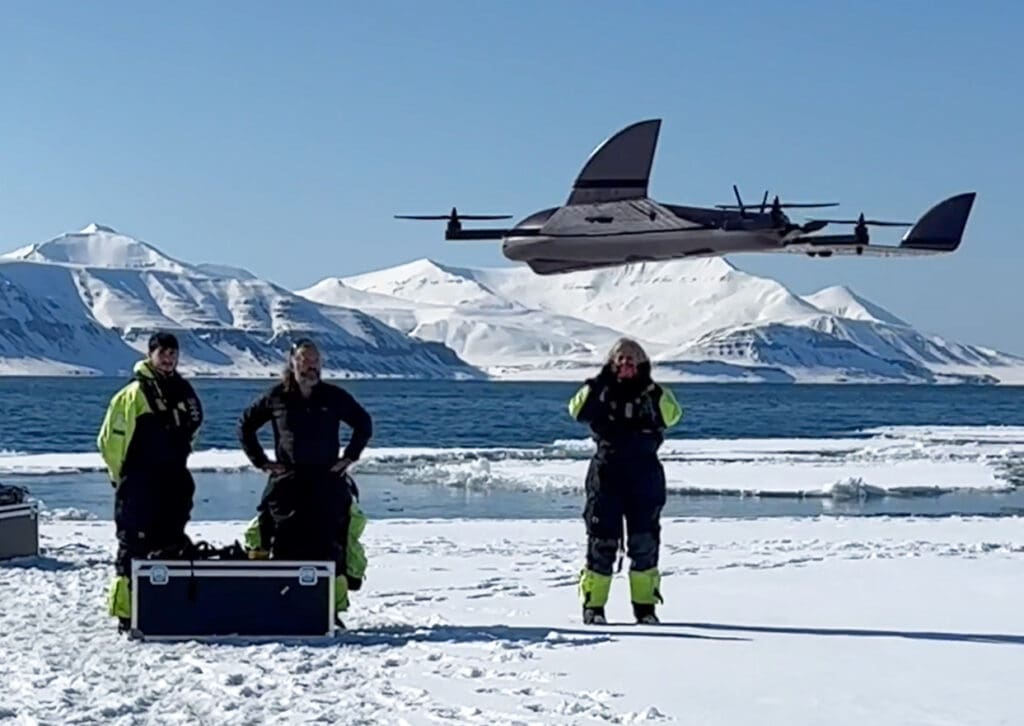
The relatively large airframe of the drone coupled with fixed-wing flight mode provided greater stability over the survey area, reducing image blurring. Photo: Christian Lydersen / Norwegian Polar Institute
Further reading
Rios MRI, Kovacs KM, Lydersen C, Ims RA, Lowther A (2025) Ringed Seal (Pusa hispida) Abundance in Isfjorden, Svalbard, After 20‐Years of Climate Change and a Concomitant Survey Hiatus. Marine Mammal Science 42(1): e70076,
Sastre A (2025) The Fjords of the Ringed Seal: Assessing the Status of Ringed Seals in Western Svalbard through Machine Learning. Thesis for Masters degree, University of Akureyri, Iceland.


